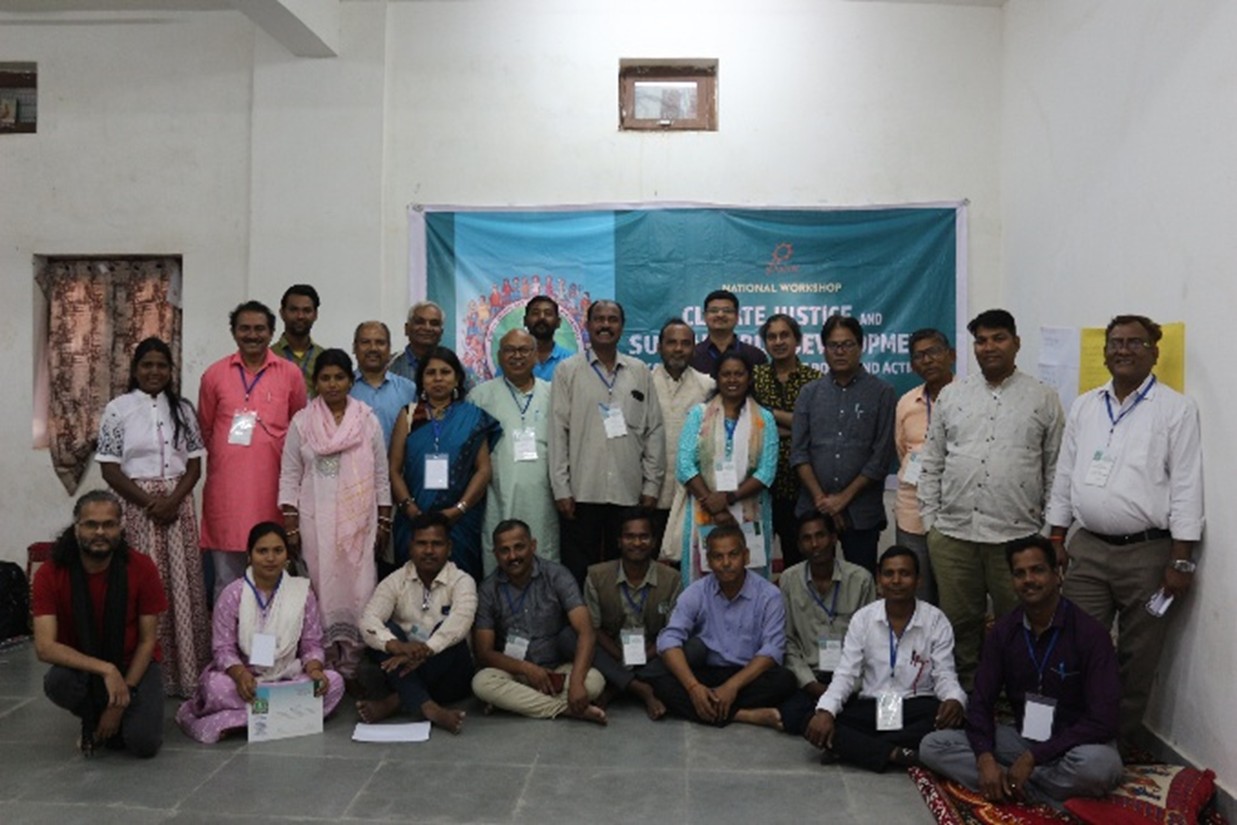
From March 20 to 22, 2025, PAIRVI organized a three-day national residential workshop on “Climate Justice and Sustainable Development: Encouraging Community Roles and Actions” at the scenic Jawai Bandh in Pali, Rajasthan.
The workshop brought together 28 participants from nine states across India, including community leaders, grassroots activists, young climate advocates, and representatives of civil society organizations. The objective of the workshop was to deepen the understanding of climate science, unpack the socio-economic and political drivers of the climate crisis, and empower participants with the tools and knowledge to engage in community-led climate action. The workshop featured rich and diverse themes, including sessions on the fundamentals of climate science, critical analysis of national and international climate policies, and the myths and misconceptions around false solutions. Special attention was given to the impacts of heat waves and heat index and other extreme weather events, with sessions on vulnerability assessments and localized strategies for climate resilience.
Ajay Jha from PAIRVI and Soumya Dutta of MAUSAM served as the principal resource persons, facilitating highly interactive sessions that encouraged critical thinking and dialogue. PAIRVI’s Dinbandhu Vats delivered a presentation on the intersection of climate change and child rights, emphasizing the disproportionate impact of climate-induced distress on children’s health, education, and overall well-being. KP Singh, Principal of Arawali College, Sumerpur, shared valuable insights into traditional water conservation practices of Rajasthan, including age-old models like johads, baoris, and tankas, which continue to serve as sustainable and community-driven water management solutions in arid regions.
The workshop culminated in participant developing a brief action plan tailored to their local context, outlining steps for climate adaptation, advocacy, and awareness within their communities. These included initiatives such as evidence generation, local climate literacy campaigns, community vulnerability mapping, engagements on environmental education, and advocacy with local bodies for sustainable development planning. The workshop served as both a platform for collective learning and a springboard for local action, reaffirming the central role of communities in advancing climate justice.