
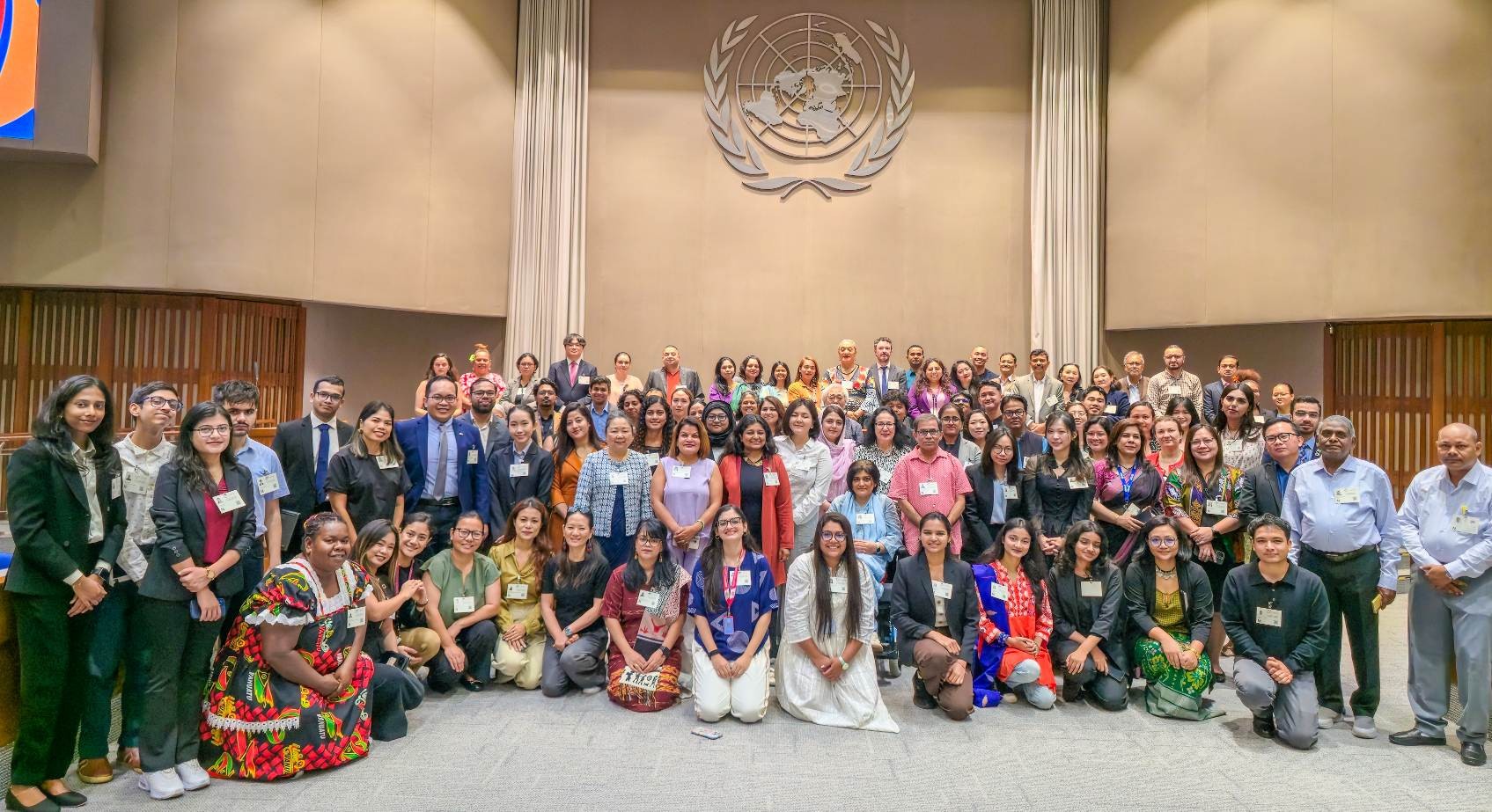
24th to 27th February, 2026,
United Nations Conference Centre, Economic and Social Commission for Asia and the Pacific
Around 100 participants from the Peoples Forum organized by APRCEM participated in the 13th APFSD. The APRCEM organizes interface of the APFSD with CSOs participants making best possible efforts to facilitate equitable representation of all constituency, sub region and interest groups in the managing speaking opportunities and interventions from the CSOs. This year, 27 speakers including 4 plenary speakers were able to make their interventions during the plenaries over three days. Besides, 4 speakers were also part of the Round Table Dialogue on the SDGs 6, 7, 9, 11 and Financing for development. These interventions brought in collective statements (on behalf of the APRCEM) as well their own constituency in some cases.
On Agenda item 1 (opening) Nhunn (LGBTIQA+) reminded the APFSD of the rising poverty, hunger, inequality and shrinking space within the region. She highlighted that any post 2030 framework should directly address the systemic issues and structural barriers which trap people in poverty and underdevelopment. Janina (Urban poor) also intervened demanding public investment in community led climate resilience and support for loss and damage.
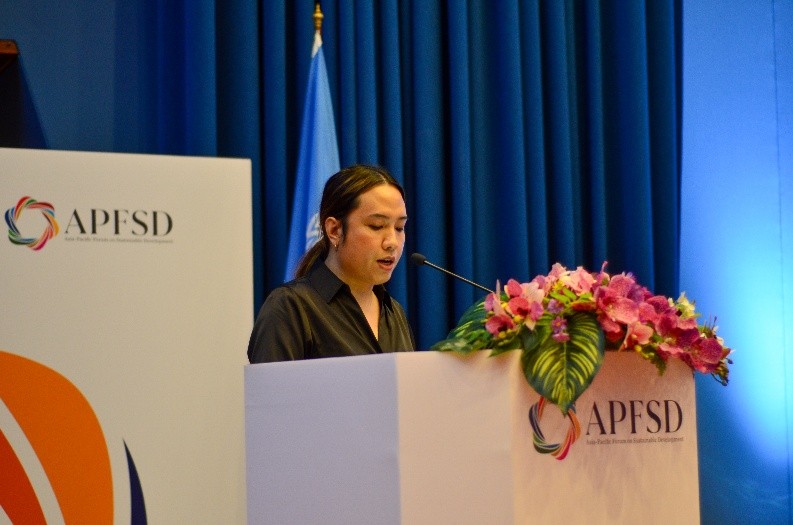
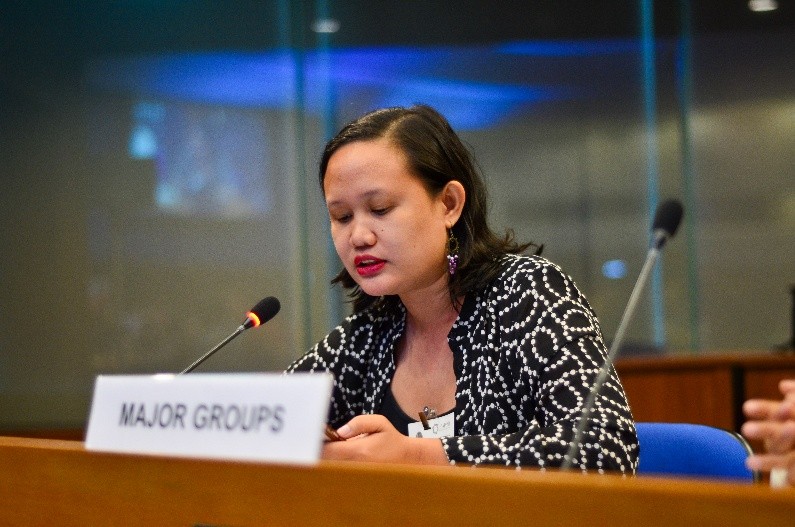
On agenda item 2 AGENDA ITEM 2: High-level multi stakeholder panel: Opportunities to translate the Doha Political Declaration into concrete actions, Shilpa Lamichchane, panelist, identified that though Doha WSSD renewed the social development mandate but remained a missed opportunity as it missed creating a global consensus on IFA reforms, political accountability and basic social protection. 6 more statements from floor including one collective and statements on behalf of youth, children and adolescents, PWD, IPs, Migrants and the CDWD (Communities discriminated by work and descent) supported the call for social protection, recognition of the rights of the IPs, inclusive infrastructure and social protection and more inclusive SDG process and social development processes.
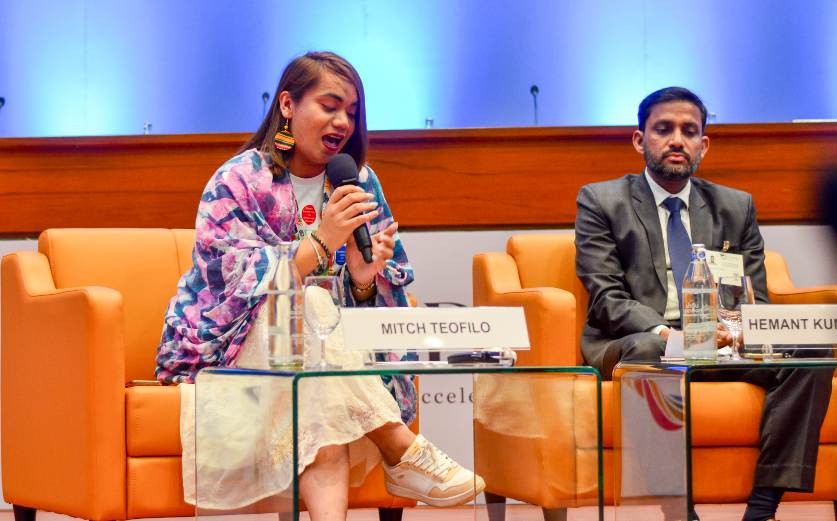
On Agenda item 3, Voluntary National Review, Mitch Teofillo (LGBTIQA+) highlighted the importance of collaborative citizen generated data and voluntary local reviews to strengthen VNRs and its accountability. Other three interventions from the floor from Fiji, Tonga and Kiribati underlined financial and capacity needs from Pacific island nations, localization of the Agenda 2030 and climate justice.
On Agenda item 4, review of regional progress for achieving the SDGs and Financing for Development, Danish Tarique (youth, children and adolescents), panelist, south Ms attention on addressing debt distress and financial constraints, expanding grant based finance, operationalizing vulnerability based financing approaches. Statements from the floor included those from fisherfolk, women, NGOs, IPs, Small and community enterprises (SCE), People living with HIV (PLHIV), Peoples Affected by conflicts and disaster. All of them underlined poor regional progress, lack of financing for development and climate finance, narrow framing of just transition, and demanded attention to debt distress, illicit financial, flow, and equitable access to markets.
Roundtable Dialogues: Roundtable dialogues aim to look into SDGs under review, come up with focused goal profile and recommendations and receive more inputs during the dialogue. Each of the Roundtable has one discussant from the CSOs/APRCEM who has been part of the goal profile development led by a relevant UN agency. This year the discussants included
- SDG 6; Shayal Nand (Women’s constituency, Fiji)
- SDG 7; Joe Baxter (IPs, Malaysia)
- SDG 9; Mrudula Poguri (Farmers, India)
- SDG 11; Urantsooj Gombersen (Women’s constituency, Mongolia)
- Financing for Development; Rochelle Porras (Workers & Trade Union, Philippines)
APRCEM Collective Side event
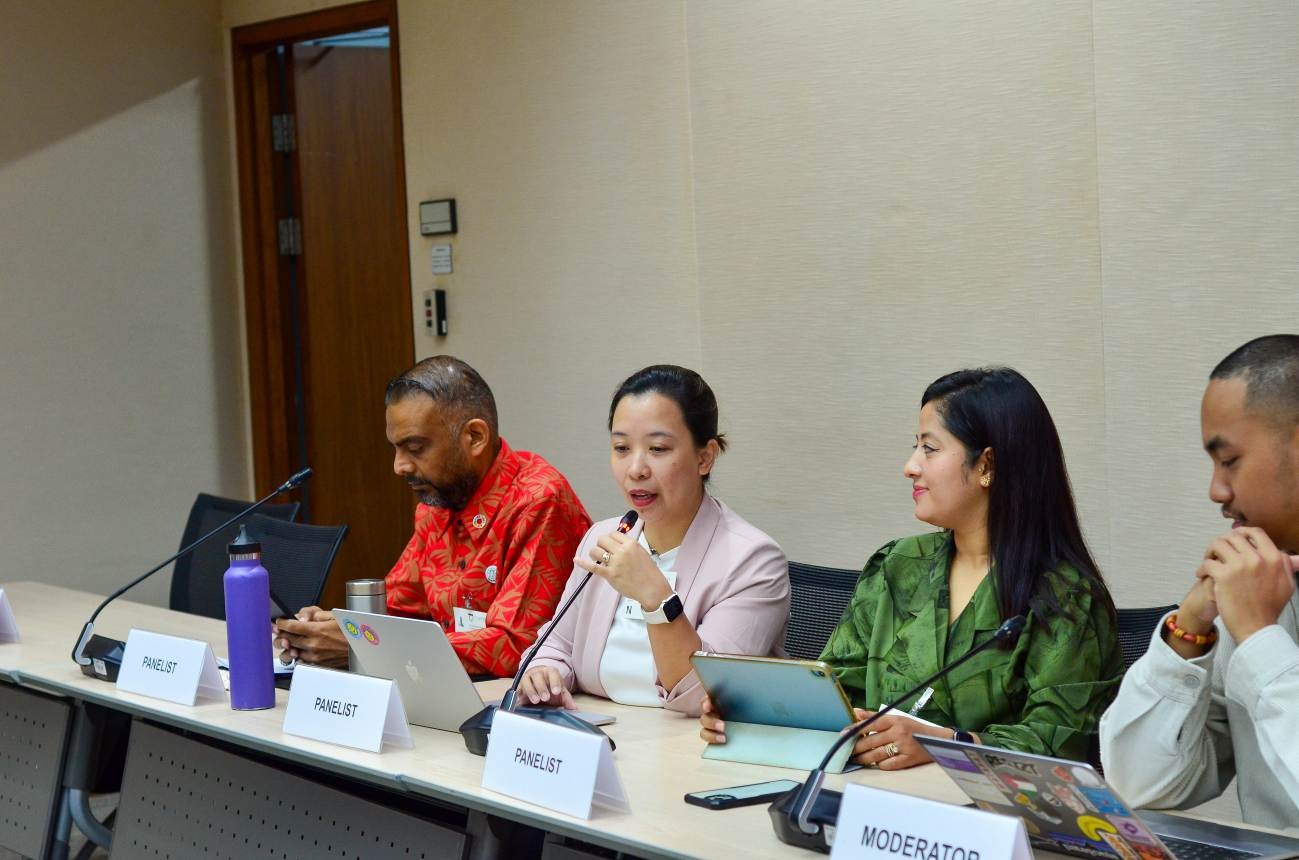
APRCEM organizes one collective side event every year besides number of side events organized by different constituencies. This year the theme of the side event (27th February, 09.00 am) was “From commitments to accountability; Reclaiming partnerships and financing for people centered development.” The speakers included Ms. April Poteria (APWLD), Ms. Shilpa Lamichchane (Visible Impact) and Mr. Akmal Ali (PIANGO). The side event was moderated by Ralf Dugan (Reality of aid, Asia Pacific). While Shilpa spoke on structural issues in the region, Ms Porteria analysed the Fifth International Conference on Financing for development and Compromiso de Sevillia, and Akmal explained the situation of countries including dependencies in the Pacific, their need for partnerships and financing.
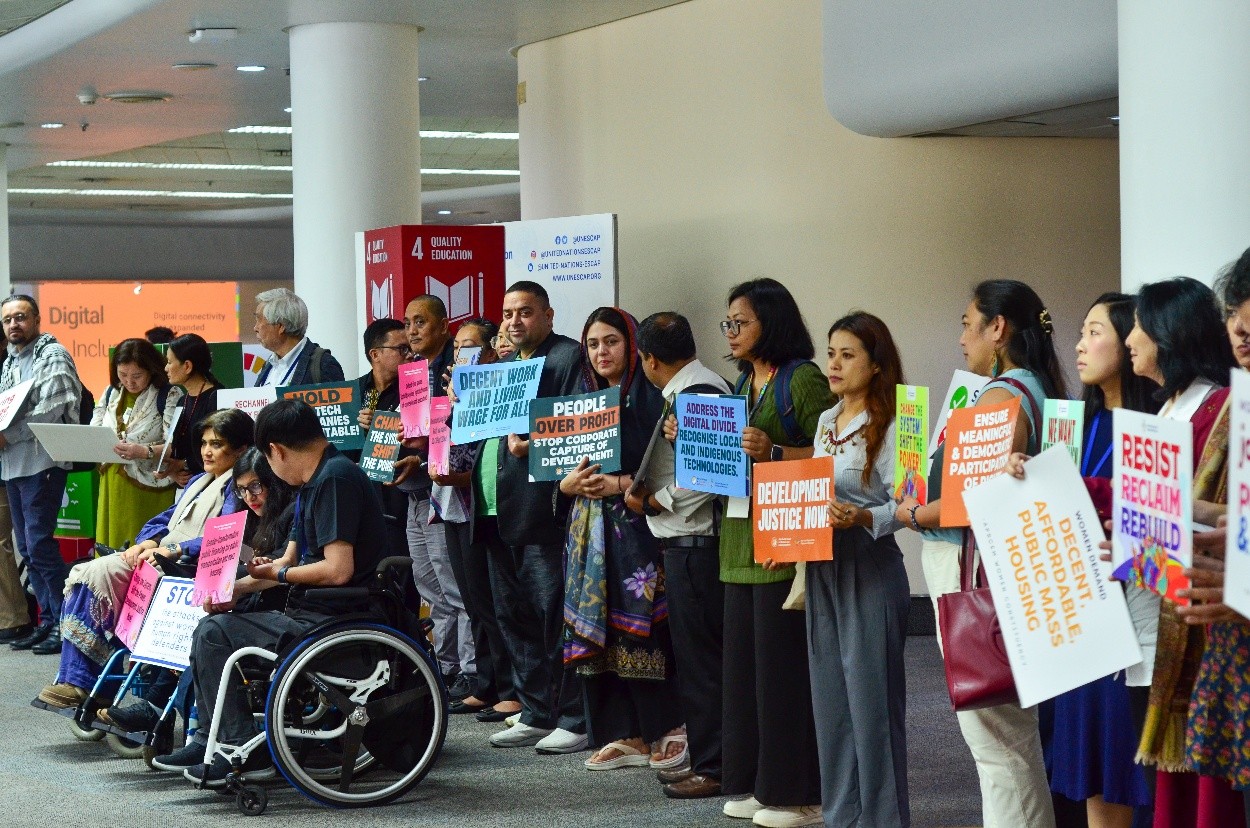 Silent Action; On the 25th February the participants of the Peoples Forum staged a silent action in front of the main plenary hall (ESCAP hall) with their calls and demands, with the objective of nudging the member states and the negotiators of their calls. More than 100 CSO representatives participated in this silent Action lasting for about an hour. Their calls predominantly focussed on development justice, climate justice, social protection, human rights, shrinking civic space, attacks on human rights and environmental defenders, direct access of climate and loss and damage fund, peace and development, and reducing on military spending etc.
Bilateral Meetings during the APFSD
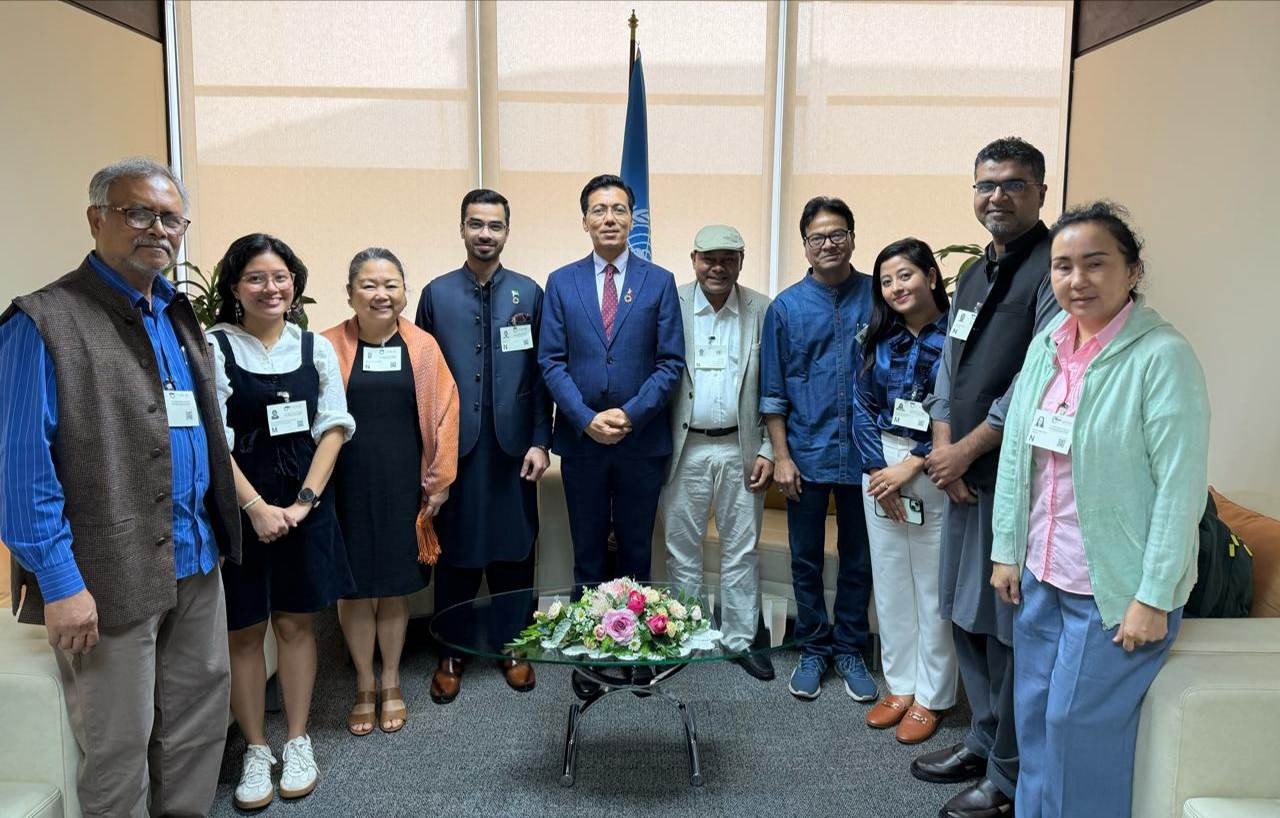
APRCEM representatives also organized a number of bilateral meetings with relevant individuals over the four days. These included;
- Meeting with the President of the ECOSOC HE Mr. Lok Bahadur Thapa
- Meeting with the 13th APFSD Chair HE Ms. Hon Fane Fotu Fituafe (Ministerial External Affairs, Tonga)
- Meeting with ESCAP Executive Secretary, Ms. Armida Salsiah Alisjajbana
- Meeting with the Director, Executive Office of the Secretary General, Implementation of the Pact for the Future Mr. Themba Kalua
- Meeting with the ILO Regional Director, Asia and the Pacific
- Bilateral Meeting with Macroeconomic Policy & Financing for Development, Mr. Hamza Malik
- Bilateral Meeting with UN ESCAP Statistics Division (DASH), Mr. Arman Bidarbakht Nia
- Women’s Constituency Meeting with the FCDO & DFAT