
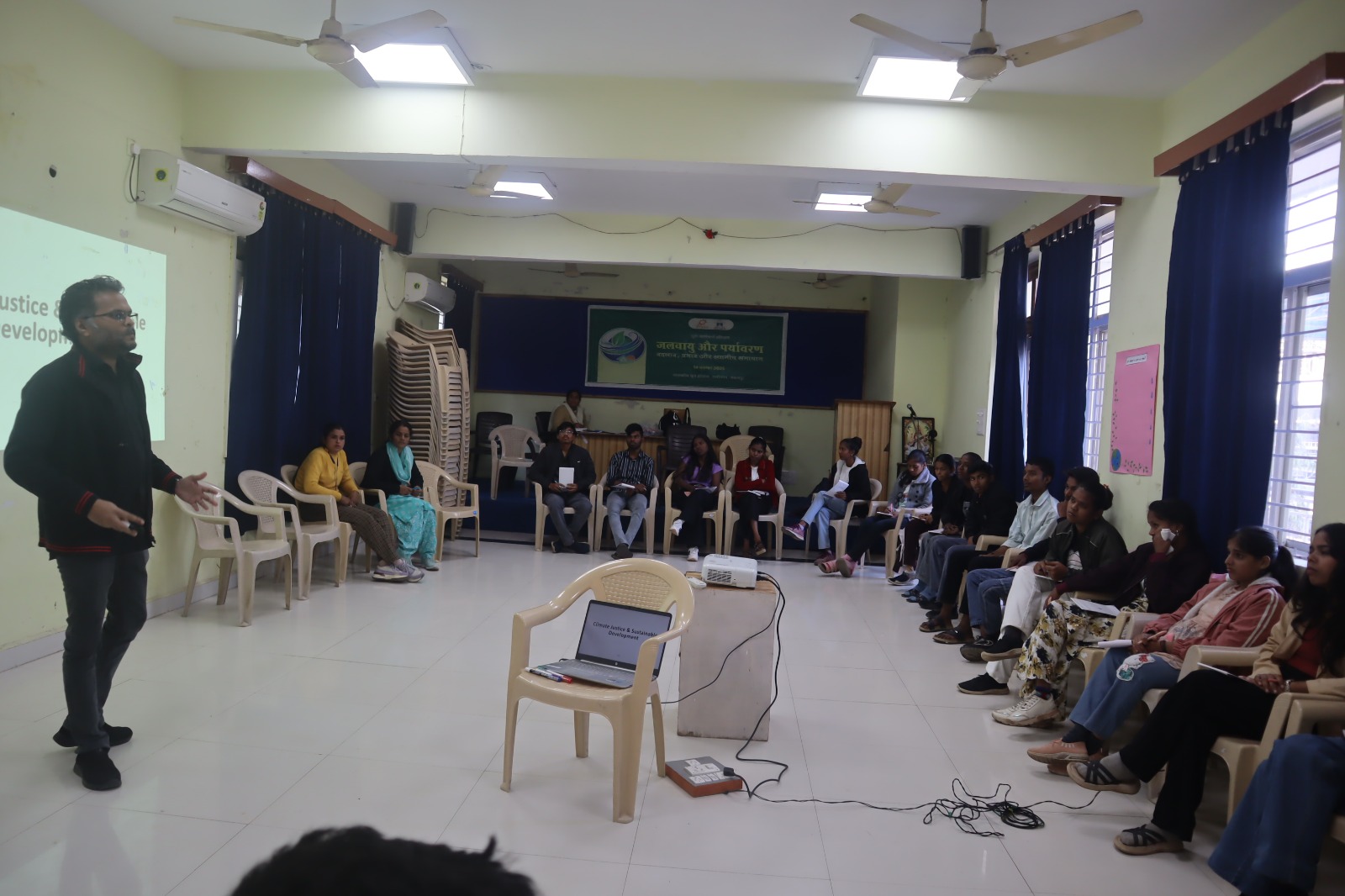
The youth volunteer workshop on Climate and Environment; Change, Impact, and Local Solutions organized by Nagrik Adhikar Manch, Jabalpur, with ‘ Support from PAIRVI. The event aimed to build foundational knowledge while inspiring practical environmental action.he program began by addressing participant expectations, which centered on gaining a deep understanding of climate crisis solutions.
Mr. Shiv Kumar, Director of Nagrik Adhikar Manch, opened the session by illustrating how climate change disrupts daily life, particularly for vulnerable groups like street vendors and daily laborers who lack a safety net against weather uncertainty. Mr. Rajneesh from ‘PAIRVI’ led the core technical session, distinguishing between weather, climate, and the broader environment. He traced the current crisis back to the Industrial Revolution, explaining that the uncontrolled burning of fossil fuels and the exploitation of nature for “progress” have led to a 1.5°C rise in global temperatures. This warming has triggered devastating consequences, including biodiversity loss, rising sea levels, and extreme weather events.
A central theme of the workshop was Climate Justice. Rajneesh highlighted a global disparity: while developed nations and major industries are the primary historic polluters, the impoverished and vulnerable sections of society bear the heaviest burden. In the Indian context, this struggle was linked to Article 21 of the Constitution, framing the fight for a stable climate as an extension of the “Right to Life.” The discussions emphasized that women, children, and construction workers face disproportionate impacts from environmental degradation. In the final segment, the workshop debunked common environmental myths. A key takeaway was that tree plantation alone cannot solve the crisis; the preservation of existing forests and the judicious use of resources are equally vital.
The interactive nature of the workshop allowed young participants to share personal experiences and resolve doubts. By the concluding session, participants reported a significant transformation in their perspective, noting that the event had enhanced their sensitivity, knowledge, and leadership potential. The workshop successfully empowered them to take responsibility as citizens committed to both environmental sustainability and social equity.