
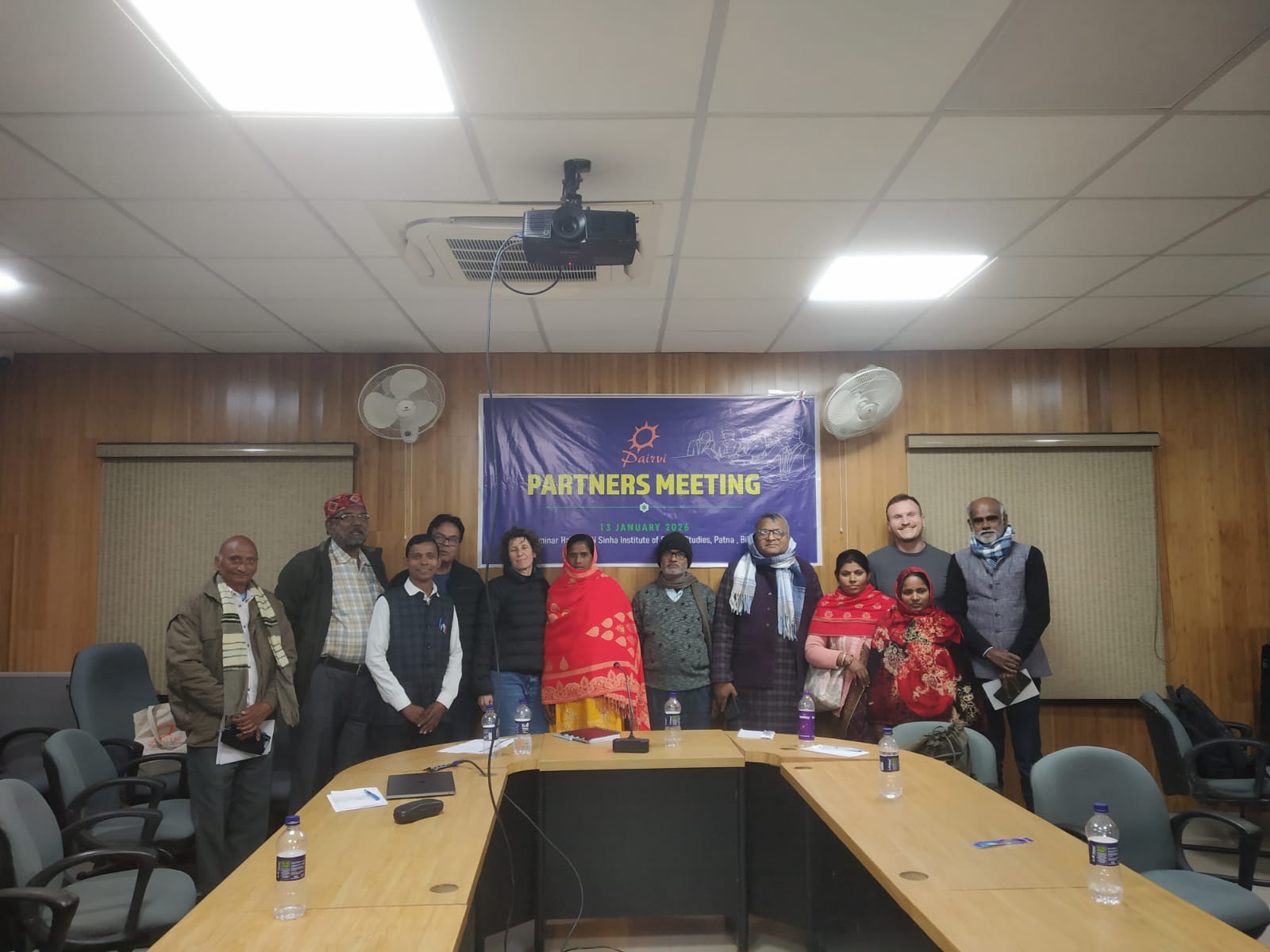
This meeting was organized with the primary objective of convening a partners’ meeting at AN Sinha Institute of Social Studies, Patna, Bihar on 13th January 2026. The meeting brought together key stakeholders and partners from Bihar and Jharkhand and was graced by distinguished international guests, including Daniel Boston from MISEREOR, Germany, the key doner agency of the project and Manu Ott from the Dalit Solidarity Group. The session created an important platform for dialogue and exchange, where local partners shared their field-level experiences, key challenges, and expectations from the programme, highlighting the ground realities of working with marginalized communities.
During the meeting, Dinbandhu Vats from PAIRVI delivered a detailed presentation providing an overview of marginalized communities in Bihar, including beedi workers, Paharia Particularly Vulnerable Tribal Groups (PVTGs), and juveniles. The presentation highlighted that marginalization in Bihar is deeply multi-dimensional and closely linked with caste, where landlessness, inadequate housing, low educational attainment, and poor health outcomes reinforce each other, perpetuating inter-generational poverty. Insights from caste survey data emphasized that the state’s challenge is not merely wealth inequality but widespread low income levels, with nearly two-thirds of families earning below ₹10,000 per month and a significant proportion surviving on less than ₹6,000, indicating extreme economic vulnerability and a bottom-heavy income structure with limited upward mobility. Further discussions underlined structural issues such as limited access to formal employment—with only about 1.57% of the population in government jobs—and the concentration of SC, EBC, and OBC communities in casual labour. Landlessness and marginal landholdings continue to push rural households into insecure livelihoods and migration. The meeting also highlighted deficits in housing, sanitation, education, and health, including high levels of malnutrition and anemia among women and children. Specific sessions focused on the conditions of beedi workers, the situation of Paharia communities including their access to social security and political empowerment, and the status of juveniles and undertrial prisoners in Bihar. The interventions of PAIRVI in these sectors were also discussed, emphasizing ongoing efforts to improve access to rights, entitlements, and justice for these vulnerable groups, while identifying the need for stronger, coordinated action in the coming phase.