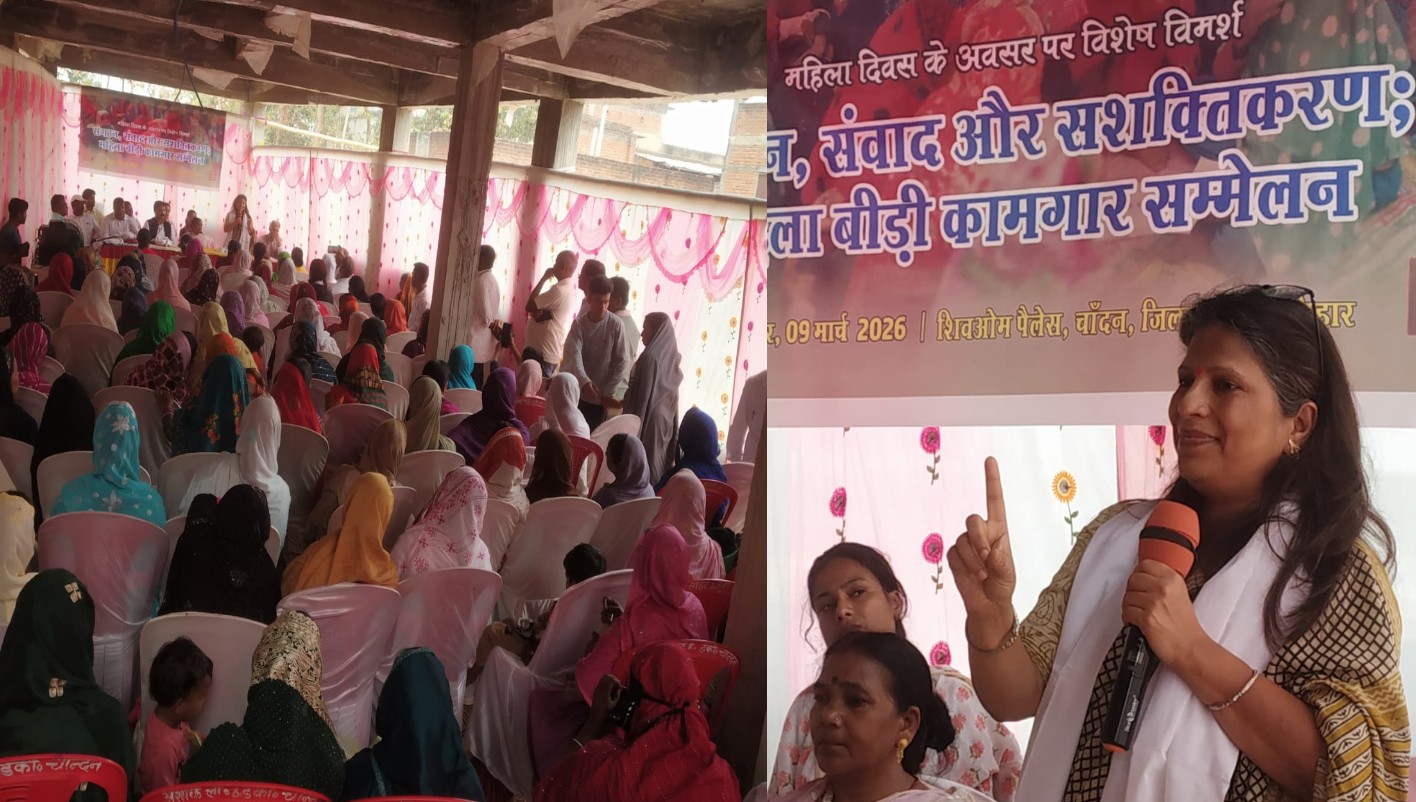
The Consultation held on 09 March 2026 at Sagun Palace, Chandan Bazar, Banka, Bihar to mark International Women’s Day, was jointly organized by PAIRVI and Lok Vikas Sansthan on the theme “Organization, Dialogue and Empowerment.” The consultation witnessed the participation of more than 150 women, including local journalists, social workers, and PRI members, making it a significant platform for collective dialogue among women beedi workers. Dr. Shipra Mathur, PAIRVI delivered the keynote address, emphasizing the urgent need for building a strong, democratic organization of women workers to assert their labour rights, demand social security, and ensure dignity and fair wages. The consultation aimed to strengthen collective efforts towards organizing women beedi workers so that they can raise their voices on issues of health, livelihood security, and alternative employment opportunities. The discussions highlighted that the beedi industry in Bihar employs lakhs of workers, over 70 percent of whom are women, largely belonging to Muslim, Dalit, Scheduled Caste, Scheduled Tribe, and Other Backward Class communities. Due to socio-cultural constraints, limited education, and lack of alternative livelihoods, these women are engaged in home-based work, often as the primary or sole earners of their families. Despite their contribution, they remain unrecognized as formal workers, with a large number not registered under labour systems. Official data suggests around 2.97 lakh registered beedi workers in Bihar, while approximately 1.25 lakh are registered on the e-Shram portal, though actual numbers are believed to be much higher. As a result, many women remain excluded from labour rights, social security schemes, and healthcare benefits, while continuing to face low wages, unsafe working conditions, and serious health risks.
The consultation also reflected on the ongoing interventions of PAIRVI in mobilizing beedi worker families, facilitating access to social security schemes, forming village-level groups, and promoting leadership development and alternative livelihoods. While these efforts have led to increased awareness and participation among women, participants collectively emphasized that without a strong, united, and democratic organization, their voices will remain unheard in policy spaces. The meeting concluded with a shared resolve to build a collective platform of women beedi workers, recognizing this conference as an important step towards strengthening organization, fostering dialogue, and advancing empowerment at the grassroots level.