
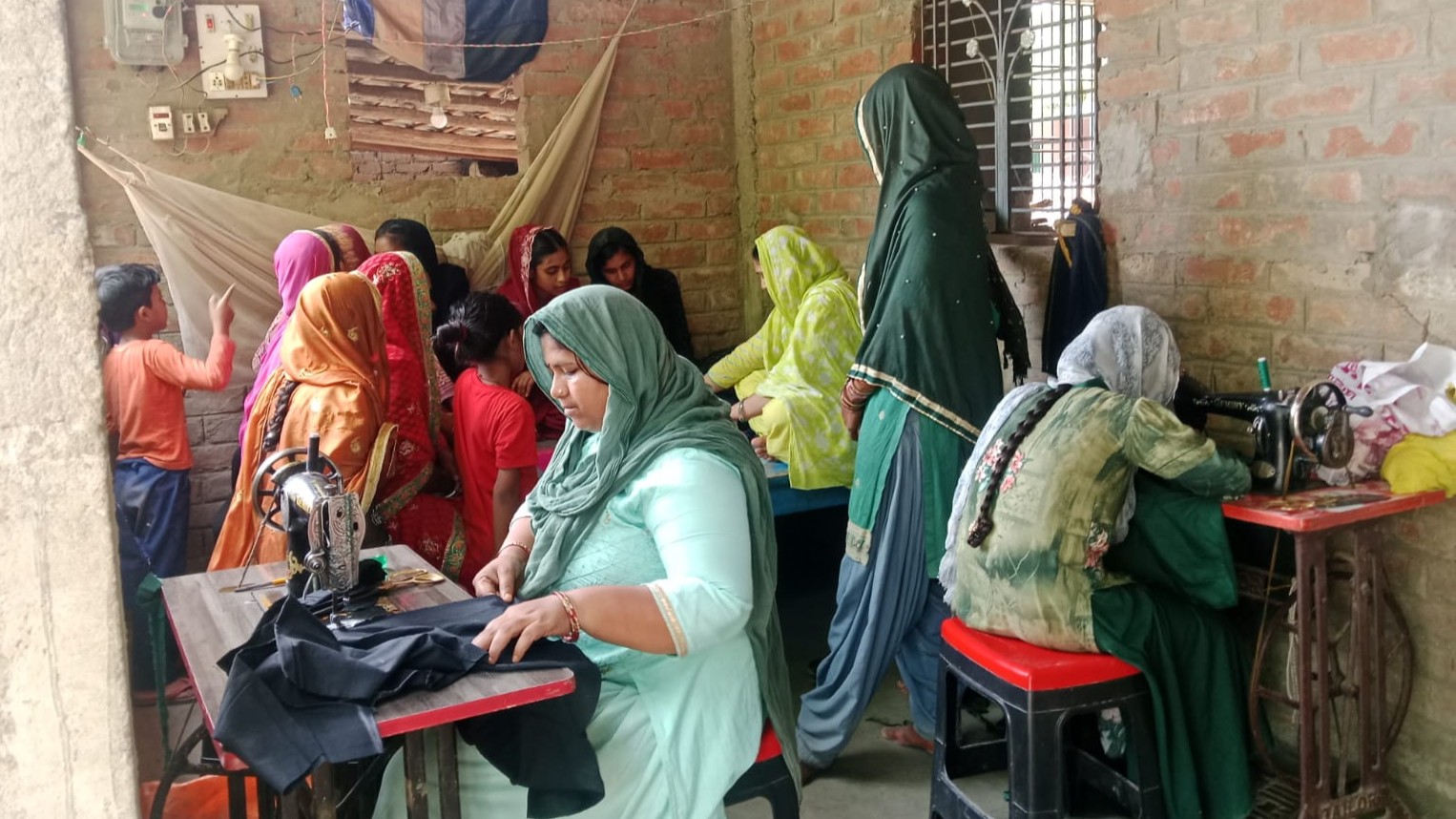
PAIRVI initiated a three-month tailoring-based skill development training programme in Jabalpur (Madhya Pradesh) and Samastipur (Bihar) to promote alternative livelihood opportunities among women engaged in beedi rolling. This intervention responds to the urgent need for income diversification for beedi workers, who often face low earnings, occupational health risks, and limited economic mobility. In Jabalpur, the training is being conducted in Panagarh, area with the participation of 25 women, while in Samastipur, 45 women from Khailspur and Ahmadpur villages under Sarairanjan block are being trained. The training programme, focuses on equipping participants with practical tailoring skills that enable both home-based work—similar to beedi rolling—and opportunities for external employment or small enterprise development.
The selection of tailoring as a trade was based on strong demand from the local beedi worker communities, as it is culturally appropriate, flexible, and compatible with women’s existing responsibilities and mobility constraints. The programme was inaugurated across locations with active community participation, reflecting a strong sense of enthusiasm and expectation among the participants. The inauguration took place in Panagarh on 12 January 2026, followed by Ahmadpur on 17 January 2026, and Khailspur on 24 January 2026. These events marked the beginning of a collective effort towards economic empowerment and skill enhancement.
The training is being facilitated by experienced local trainers, with Ms. Sita Lodhi leading the sessions in Jabalpur and Ms. Mazada Khatoon in Samastipur, ensuring context-specific and hands-on learning for all participants. Through this initiative, PAIRVI aims to build sustainable livelihood pathways for marginalized women, reduce their dependence on hazardous occupations, and enhance their capacity for income generation. In the long run, the programme is expected to strengthen financial independence among women, improve household economic security, and create opportunities for collective enterprises such as self-help group-based production units. It also instils confidence, decision-making ability, and social recognition among participants, enabling them to play a more active role in their families and communities. Overall, the initiative brings renewed hope for beedi workers to transition towards safer, dignified, and more sustainable livelihoods while securing a better future for themselves and their children.